

Managing Radiation Safely
HOME
Radioactive materials are found everywhere in our environment. Typically concentrations of radioactive materials found are low, however, higher concentrations or deposits can also be found such as in Saskatchewan’s Uranium Mines or North East British Columbia’s Oilfields. All industries which produce our natural resources can concentrate these radioactive materials to levels that pose health hazards to workers, the general public and the environment.

NormTek specializes in helping industries manage these materials and navigate the complex regulatory environment. Our experience dates back to the Energy Resources Conservation Board’s (ERCB’s) first wellbore in Alberta found to contain NORM.

NormTek provides industries with experience and assistance in all aspects of radiation protection and NORM management from initial detection through worker training, consolidation and packaging, decontamination, laboratory analysis and transport to final disposal.
NORM - Naturally Occurring Radioactive Materials
All matter found on Earth is made up of atoms. Some of these atoms are considered radioactive. All this means is the atoms are unstable and breakdown over time. If the concentration of these atoms is high enough, Health and Safety issues arise for workers handling these materials as these atoms naturally break down. All soils contain radioactive atoms with varying concentrations throughout the earth. The uranium mines of northern Saskatchewan contain some of the highest concentrations levels of uranium found in the world and the oilfields of northern British Columbia some of the highest concentrations of radium. The radioactive atoms which are found in our environment naturally are referred to as "NORM".
All Industries that produce our natural resources have the potential to concentrate the low levels of NORM found in our environment. Those industries, such as uranium mine operators, which concentrate the radioactive materials on purpose, are governed by the Canadian Nuclear Safety Commission (CNSC). Those industries which concentrate the materials by accident, while producing non-radioactive resources, such as oil and gas companies, are governed by provincial legislation in Canada.
The Canadian NORM Guidelines are a federal document developed to help provincial regulators and industry with the challenges of properly managing NORM. The guidelines are the basis for development of more formal provincial legislation and industrial radiation safety programs that meet Canada's international commitments to radiation protection. These International bodies include the International Commission on Radiological Protection (ICRP and the International Atomic Energy Association (IAEA).
NormTek was formed to provide cradle to grave NORM management services to industries that concentrate radioactive materials (NORM) during the production of our natural resources. Our experience stems back to the first oil and gas well identified by the Energy and Resource Conservation Board (ERCB) to contain radioactive materials (1988). Since this time we have worked with industry and regulators in developing policies, procedures and regulations for the safe management of NORM from initial detection through decontamination and ultimate disposal.
SERVICES
NormTek provides cradle to grave NORM management solution to resource based industries that generate NORM. These services are completed both at generator sites and at Tek’s Fort St. John decontamination facility. All projects completed under the direction of qualified Radiation Safety Officers (RSO’s) and overseen by qualified Radiation Protection Officers (RPO’s). Utilization of NormTek’s qualified professionals ensures the proper radiation protection requirements are maintained in accordance with Canada’s complex radiation and OH&S regulation and ensures appropriate records are maintained including dose assessments.
RADIATION ASSESSMENTS, MONITORING AND SURVEYS
NormTek employs numerous monitoring methods, instruments and surveys techniques to complete documented assessments in accordance with generally accepted radiation protection principles and practices. These assessments are provided to clients to verify compliance with NORM regulations and provide the applicable information necessary for worker protection.
Radiation safety officers have the experience to ensure safety of workers and proper handling of waste.
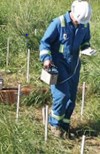
Gamma radiation screening surveys are used to detect gamma radiation being emitted from equipment or waste. This allows operators to verify the existence of NORM within process equipment for maintenance planning and verifies appropriate management of waste. All facilities within NORM producing industries should have an initial gamma radiation screening survey completed to verify if NORM is present at their facilities or worksites.
Normtek only uses certified radiation safety personnel to complete gamma radiation screening surveys.
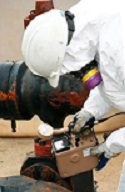
Contamination surveys are used to detect the presence of alpha and beta radiation on equipment or work surfaces. Not all NORM isotopes emit gamma radiation levels that are detectable with standard gamma radiation monitors, such as Lead 210. Contamination surveys are also effective in verifying if contamination exists on personnel or equipment prior to removal from control areas.
Contamination surveys ensure workers do not spread radioactive materials outside areas where workers are not wearing appropriate PPE.
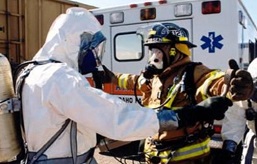
Radiation Surveys are used to verify the exposure to workers. Dose estimates can be based off both external exposure pathways and internal exposure pathways. Radiation Surveys are used to determine the NORM management classification of a worksite.
GPS NORM Surveys are used to verify contamination on sites and provide detailed assessments for planning and remediation.
Swipe Tests are used to verify removable surface contamination. Swipes are counted in particle counters to verify the presence of surface contamination in work areas or on equipment and tools. In addition, swipes are used to verify contamination is not present in areas where contamination should not be. These include lunch rooms, offices and vehicles.
Low Level Radioactive Dust (LLRD) Monitoring is completed using air monitoring pumps to verify air quality at a worksite. Results are used to verify the need of respiratory protection from an operation or verify radionuclide uptake in the event of respiratory malfunction.
Low level radioactive dust monitor provides exposure data of personnel in the event of respirator malfunction and verifies work area’s that require controls.

Radon Gas Testing is completed to verify levels of Radon gas at a worksite. Worksites with elevated levels of Radium 226 should conduct Radon gas testing to verify appropriate radiation protection measures necessary for worker protection.
Radiation Safety Officers provide onsite services to ensure compliance with OH&S regulations by informing workers of the hazards to NORM exposures, developing site specific radiation protection plans based of operation being undertaken, completing appropriate transportation documents and ensuring appropriate records are maintained to ensure regulatory compliance. Personnel performing maintenance activities require monitoring with records of exposures to meet OH&S regulations.
Radiation safety officers have the experience to ensure safety of workers and proper handling of waste.
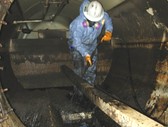
NORM Decontamination Services of equipment are provided by NormTek. These services are provided both on-site through a closed loop tubing decontamination unit or at NORM’s facility located in Fort St. John B.C. Ultra High Pressure water blasting technology allows any equipment to be safely decontaminated to unrestricted derived release limits as outlined by Health Canada’s Canadian NORM Guidelines. NormTek’s decontamination unit is capable of providing vacuum collection, filtering of wash waters and providing up to waterjet cleaning up to 40,000 PSI all in one unit.
NormTek’s decontamination unit is capable of providing vacuum collection of waste, filtering of wash waters and providing ultra-high waterjet pressures 40,000 PSI all in one unit.
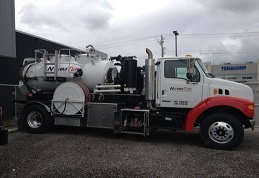
Waste Management Services include waste consolidation, tracking and disposal. NormTek utilizes a fleet of vacuum containers designed to transport NORM impacted materials for disposal.
Radiation Protection Training is a regulatory requirement for workers who handle NORM impacted materials. NormTek can provide the ENFORM NORM Awareness training or custom design training programs which meet corporate needs.
Radiation Protection Programs are a regulatory requirement for employers who’s employee’s handle NORM impacted materials or waste. NormTek has Radiation Protection Officers experienced in development and implementation of these programs as well as Radiation Safety Officers capable to oversee their implementation.
Radiochemical Analysis is completed with NormTek’s mobile laboratory. Analysis can be completed on site to ensure timely transportation and disposal of NORM impacted waste.
RADIATION SAFETY
Radiation Safety is the protection of workers and the general public from the harmful effects of radiation. Industries that produce NORM can concentrate the radioactive materials found in our environment to levels that exceed Canada’s Radiation Protection Regulations. Exposures to radiation cannot be prevented, however they can be controlled. A proper Radiation Safety Program will control both internal and external radiation exposures. Radiation Protection Programs or safe work practices are required by regulations.
In the Oil and Gas Industry we have seen levels as high as 450 µSv/hr on contact of waste and 50 µSv/hr at 1 meter. An incidentally exposed worker could not spend more than 20 hours within 1 meter of the waste without exceeding the regulatory limit for an external exposure. We have also seen waste with activity levels up to 28,600 Bq/g. Inhalation or ingestion (Internal Exposure) of a volume less than the size of the tip of a pencil would exceed regulatory limits.
Implementation of a Radiation Safety Program will ensure workers maintain exposures to levels that are well below regulatory limits and maintained under the principle of ALARA (As Low As Reasonable Achievable). This principle is recognized by all levels of governments and a requirement under the Radiation Protection Regulations. This principle means the following:
"All radiation exposures are considered potentially hazardous to health regardless of any regulatory limit. A regulatory limit is an exposure that should not be exceeded. It is simply not acceptable to just maintain worker exposures to values below regulatory limits. Organizations must maintain exposures as low as reasonable achievable social and economic factors taken into consideration."
Many organizations have NORM policies and procedures that outline the appropriate PPE to be worn when working with NORM impacted materials or waste. These types of policies only prevent inhalation or ingestion exposures. A detailed Radiation Safety Program will include:
- Identification of who is in charge of overall radiation safety for the organization. This is not necessarily the person on a NORM site but rather the person workers can call to address radiation safety concerns. This person is typically called the corporate Radiation Safety Officer (RSO) and must have extensive knowledge and experience in radiation protection.
- Outlines the corporations requirements on surveys to identify NORM impacted waste and materials as well as monitoring requirements and will include the following:
- Gamma radiation surveys requirements for detection of NORM impacted materials and waste.
- Contamination surveys to identify objects that require cleaning or need to be controlled. These types of surveys prevent NORM accumulations from being spread around a worksite giving potential for workers to ingest.
- Air monitoring requirements to detect levels of radon gas in the work area or low level radioactive dusts (LLRD’s). Health Canada has established maximum concentration limits of radon in air that a workplace cannot exceed. Monitoring for LLRD’s determines the need for respiratory protection and dust control measures. If LLRD’s cannot be eliminated, air monitoring is required to verify the internal exposures of workers in the event of respiratory malfunction.
- Radiation Survey requirements. Radiation surveys are required to verify if external exposures in a work area need to be controlled. Control of these work areas are typically completed by controlling the amount of time workers may spend in that area.
- Identifies how internal exposures will be controlled within the organization. This may include engineered controls at specific sites or administrative controls such as NORM policies, procedures or codes of practice. These policies outline how contamination will be controlled to prevent ingestion such as setting up control area’s and how inhalation will be prevented by dust control measures and appropriate PPE. A control area is an area where exposure to radiation may occur and is identified by signage. Special policy and procedures are required within this area to control radiation exposures.
- Identifies how external Exposures will be controlled within the organization. External exposures cannot be eliminated only controlled as we live in a world where radiation is all around us (i.e. Gamma rays from the sun). External exposures can be controlled from NORM impacted materials or waste through the following means:
- By controlling the amount of time we spend around the NORM impacted materials or waste.
- By keeping our distance from the NORMN impacted material or waste such as putting up fencing and restricting access to NORM impacted areas.
- Shielding the NORM impacted materials or waste to prevent the gamma rays from reaching workers. This method typically is not practical in the oil and gas industry for NORM impacted materials or waste. It is however common with man-made sources where the size of the source is small and can be housed in materials such as a lead lined enclosure.
- Defines record keeping requirements. Exposures to workers are based off yearly exposures. As such records must be maintained from exposures do to daily work activities in order to compile these yearly assessments. A radiation safety program outlines how these records will be maintained to verify worker exposures.
- Defines training requirements for workers.
- Defines transport requirements and procedures. NORM impacted materials or waste with activities greater than 70 Bq/g fall under the requirements of the packaging and transport of nuclear substances regulations (PTNSR). NORM Waste or materials with activities less than 70 Bq/g fall under provincial authority and only require a manifest. This activity of 70 Bq/g assumes a single radionuclide. NORM waste can have radionuclides from both the U238 and Th232 decay series and as such are considered a mixture of radionuclides. The PTNSR outlines the method for determining the activities of mixtures to verify if the PTNSR apply for the mixture.
Note: Prior to shipment you must determine the activity of the waste to verify appropriate regulations applicable to the shipment. Laboratory analysis can verify the activity of a NORM impacted shipment or estimates, by a qualified radiation expert, can be utilized.
Normtek has a mobile laboratory for completing sample analysis prior to transport. The CNSC requires transporters of NORM impacted materials or waste have a written Radiation Safety Program if activities fall under their regulatory control (Radiation Protection Program Design for the Transport of Nuclear Substances GD-314).
REGULATIONS
In 1946, the Parliament of Canada passed the Atomic Energy Control Act and established the Atomic Energy Control Board (AECB), providing it with the power to regulate all nuclear activities related to the development and use of atomic energy in Canada. In May 2000, the Nuclear Safety and Control Act (NSCA) came into effect and established the CNSC as the successor to the AECB, with responsibilities and authorities to regulate an industry that spans all segments of the nuclear fuel cycle and a wide range of industrial, medical and academic uses for nuclear substances.
At this time Naturally Occurring Radioactive Materials – NORM were specifically excluded from the CNSC regulatory control with the exception of import/export of NORM and transport if activity concentrations exceeded 70 Bq/g. As such, each Canadian Province or Territory has regulatory control in its jurisdiction over NORM. In order to assist provincial regulators and industry to properly manage NORM, Health Canada, developed the Canadian Guidelines for the Management of Naturally Occurring Radioactive Materials – NORM (Canadian NORM Guidelines).
Canada’s radiation protection standards, including the Canadian NORM Guidelines, are benchmarked against international standards. To do this, Canada relies on the work of international organizations such as the International Atomic Energy Agency (IAEA) and the International Commission on Radiological Protection (ICRP). These organizations are composed of leading experts in the management of radioactive materials. With the cooperation of its member states (Canada included), the IAEA publishes a number of international standards, including the international Basic Safety Standard - “Radiation Protection and Safety of Radioactive Sources. This standard provides the basic principles and practices to ensure protection for workers and members of the public from radioactive materials. Exposure limits recommended by these organizations have been adopted by regulators (including the Canadian Nuclear Safety Commission and Health Canada), and form the basis of Canada’s regulations.
CANADIAN NORM GUIDELINES
The Federal Provincial Territorial Radiation Protection Committee (FPTRPC), a Canadian intergovernmental committee established to support federal, provincial and territorial radiation protection agencies in carrying out their respective man dates, recognizes that the potential To that end, the Canadian NORM Working Group has, on behalf of the Federal Provincial Territorial Radiation Protection Committee, produced the Canadian Guidelines for the Management of Naturally Occurring Radioactive Materials (NORM). These NORM Guidelines are an extension of the work done by the Western Canadian Committee on Naturally Occurring Radioactive Materials (NORM) published in August 1995 as the Guidelines for the Handling of Naturally Occurring Radioactive Materials (NORM) in Western Canada. The differences between the Canadian Guide lines and the Western Canadian Guide lines reflect changes in national and international radiation protection practices and consensus on standards for NORM classification and management since 1995. The Canadian NORM Guidelines set out principles and procedures for the detection, classification, handling and material management of NORM in Canada. These Guidelines provide the framework for the development of more de tailed NORM management practices and guide lines by regulatory authorities and affected industries.
OCCUPATIONAL HEALTH AND SAFETY REGULATIONS
Detailed Radiation Protection regulations for NORM have not been developed and as such worker protection falls under provincial Occupational Health and Safety Regulations. Although each provincial OH&S regulation wordings differ slightly the basic concept is the same. If an employer subjects a worker to a potential hazardous material including NORM they must ensure the following:
- Develop and implement an exposure control plan or safe work practices and procedures that are to be implemented when workers deal with or approach a radiation source. These procedures must be in writing and outline who is in charge of radiation safety and how exposures will be controlled in the workplace. In radiation terms, these procedures are typically referred to as a Radiation Safety Program.
- Advise workers of the potential hazards of ionizing radiation and the measures to mitigate exposures. Depending on the task this may be a 15 minute tailgate meeting or an in-depth review of radiation health hazards consistent with a course that certifies radiation safety officers.
- Monitor the workplace to ensure compliance with the regulations and maintain records for review. Internal exposure monitoring includes contamination surveys, swipe tests, Low Level Radioactive Dusts (LLRD) monitoring and Radon Gas monitoring. external gamma ray exposures as well internal contamination surveys.
- Maintain exposures As Low AS Reasonable Achievable (ALARA). The CNSC, Health Canada’s Canadian NORM Guidelines and OH&S Regulations all require radiation exposures be maintained in compliance with the principle of ALARA.
PRINCIPLE OF ALARA
Any exposure to radioactive materials is considered potentially hazardous. However, we live in a world where radiation forms part of our environment (Natural Background) and as such exposures to NORM cannot be eliminated. Where many hazardous substances can be immediately hazardous to health such as H2S gas exposure, NORM is typically considered a chronic exposure hazard. The effects from NORM may not be noticed for several years and is typically the result of repetitive exposures and not from a single NORM source. The principle of ALARA states it is not simply justifiable to maintain an exposure below a regulatory limit but rather all exposures must be maintain as low as reasonable achievable. The regulatory limit is a value that should not be exceeded. Radiation Safety Programs outline how worker exposures will be maintained within the principle of ALARA during day to day operations. An on-site Radiation Safety Officer should be used during maintenance activities that do not occur on a regular basis to ensure compliance with this principle.
WASTE CONTROL REGULATIONS
Industries that produce our natural resources and operate under provincial jurisdiction typically produce NORM in the form of waste. If an industry produces our natural resource for the radioactive properties within the natural resource, they fall under CNSC control. Waste within Canada is classified as Hazardous, Non-Hazardous or Radioactive. All waste has some degree of radioactivity and as such waste with activity concentration greater than those specified in the Canadian NORM Guidelines are considered radioactive waste. Waste control regulation have only been developed for hazardous and non-hazardous waste and as such generators of NORM waste can obtain an approval for disposal from their provincial regulator or dispose of the waste at a facility already provincially approved for NORM waste.
Service providers to NORM generating companies typically require approval from their respective provincial regulator. Companies wanting to manage NORM waste at their own facilities will need to provide regulators with the appropriate information outlining services provided and methods for worker, public and environmental protection. In many cases NORM waste may also contain other hazardous substances and an approval for the hazardous substance would also be required. These companies should contact their appropriate provincial regulator for approval.
TRANSPORTATION
Transport of NORM falls under provincial jurisdiction unless the activities of the NORM shipment are greater than 70 Bq/g. NORM shipments greater than 70 Bq/g fall under federal jurisdiction of the Canadian Nuclear Safety Commission (CNSC) through the Packaging and Transport of Nuclear Substances Regulations (PTNSR). The PTNSR reference and follow the International Atomic Energy Agencies (IAEA) Regulations for the Safe Transport of Radioactive Materials 1996 Edition (Revised). Shipments with activities under provincial jurisdiction must be packaged so as to prevent the dispersal of the radioactive materials during transport and require a manifest with the descriptor “Naturally Occurring Radioactive Materials – NORM”. NORM shipments under federal jurisdiction are further classified based off the amount of radioactivity in the shipment, specific activity and radionuclides contained in the materials being shipped and form of radioactive materials (Equipment, liquids, Solids). Typically federal shipments of NORM fall under the following classifications:
- Exempt Package
- Limited Quantity of Materials in Excepted Packages - UN2910
- Low Specific Activity Materials (LSA-I) UN2912
- Surface Contaminated Objects (SCO-1) UN2913
- Type A Package – UN2915
A laboratory analysis is required to ship NORM or the activity can be estimated by a qualified person who must be able to justify the activity calculations using standard radiation estimation principles and practices. A history of the NORM materials can help substantiate radionuclide's and activity concentrations. NORM shipments can typically include radionuclide's from both the U-238 and Th-232 decay series, and as such maybe considered a mixture of radionuclide's. The PTNSR outlines the calculations required to determine exemption limits for mixtures of radionuclide's.
NORM TRAINING
Occupational Health and Safety Regulations requires training for workers if an employer has the potential to subject a worker to a hazardous substance including NORM. In some cases this could be a 15 minute tailgate meeting or a full day industry recognized training course. ENFORM, the safety association for Canada’s upstream oil and gas industry, has developed a worker level NORM training course designed to provide the basic knowledge for workers to handle NORM impacted materials. Normtek instructs this course and can arrange on-site instruction. Alternately custom designed courses can be arranged. The following is an outline of the different NORM workers and their associated knowledge requirements.

NORM DOCUMENTS
Health Canada
Canadian Nuclear Safety Commission (CNSC)
- Canadian Nuclear Safety Control Regulations
- GD-314 Radiation Protection Program Design for the Transport of Nuclear Substances
- Keeping Radiation Exposures and Doses ALARA G129
- Packaging and Transport of Nuclear Substances Regulations
- Radiation Protection Regulations - CNSC
International Atomic Energy Association (IAEA)
- IAEA Glossary of Radioactive Terms
- International Basic Safety Standards
- Radiation Protection and the management of Radioactive Waste in the Oil and Gas Indusrty
- Regulations for the Safe Transport of Radioactive Materials
LINKS
- Canadian Nuclear Safety Commission
- Health Canada
- Canadian Nuclear Society
- Canadian Radiation Protection Association
- International Commission on Radiological Protection
- International Atomic Energy Agency (IAEA)
- Health Physics Society
- Tenorm page
CONTACT US
Send your message in the form below and we will get back to you as early as possible.

115, 1925 - 18th Ave N.E
Calgary, AB T2E 7T8
Ph: (403)536-6763
Decontamination Facility:
9676 Swanson Street
Fort St. John, BC V1J 4J2
Ph: (250)785-6800